Smog · Immunity · Pakistani food
Smog Season in Lahore: What to Eat to Support Your Lungs and Immunity

Every winter, the sky over Lahore and much of Punjab turns grey, eyes start burning and coughs fill the house. Many of us ask the same question: can what we eat help?
Short answer: food can't clean the air you breathe, so masks and staying indoors on bad days come first. But a diet full of vitamin C, colourful vegetables and healthy fats gives your body the nutrients it uses to deal with pollution. Researchers think nutrients like vitamin C, carotenoids, vitamin E and omega-3 fats may help protect the lungs from pollution damage, although more studies are needed (Whyand et al., 2018). The good news: the best foods for this are cheap and in season in Pakistan right now.
First things first: food is not a mask
Air pollution harms the lungs, heart and more, and the World Health Organization lists it among the biggest environmental risks to health (WHO). On high-AQI days:
- Wear a well-fitted N95 mask outdoors.
- Keep windows closed and stay indoors when you can, especially children, older family members and anyone with asthma or heart disease.
- See a doctor if you have trouble breathing, chest pain, wheezing or a cough that won't settle.
Eat well as well as doing these, not instead of them.
Which foods are high in vitamin C?
Vitamin C is an antioxidant, which means it helps protect your cells from damage, and pollution increases that damage. Adults need about 75 mg a day (women) and 90 mg (men), and smokers need 35 mg more (NIH).
Winter in Pakistan makes this easy:
| Food | In season | Vitamin C per 100 g |
|---|---|---|
| Amrood (guava) | Oct–Feb | ~228 mg |
| Malta (orange) | Dec–Mar | ~53 mg |
| Kinnow (mandarin) | Dec–Mar | ~27 mg |
| Tomato | Year-round | ~14 mg |
Values from USDA FoodData Central for guava, orange, mandarin and tomato. Fresh fruit can vary.
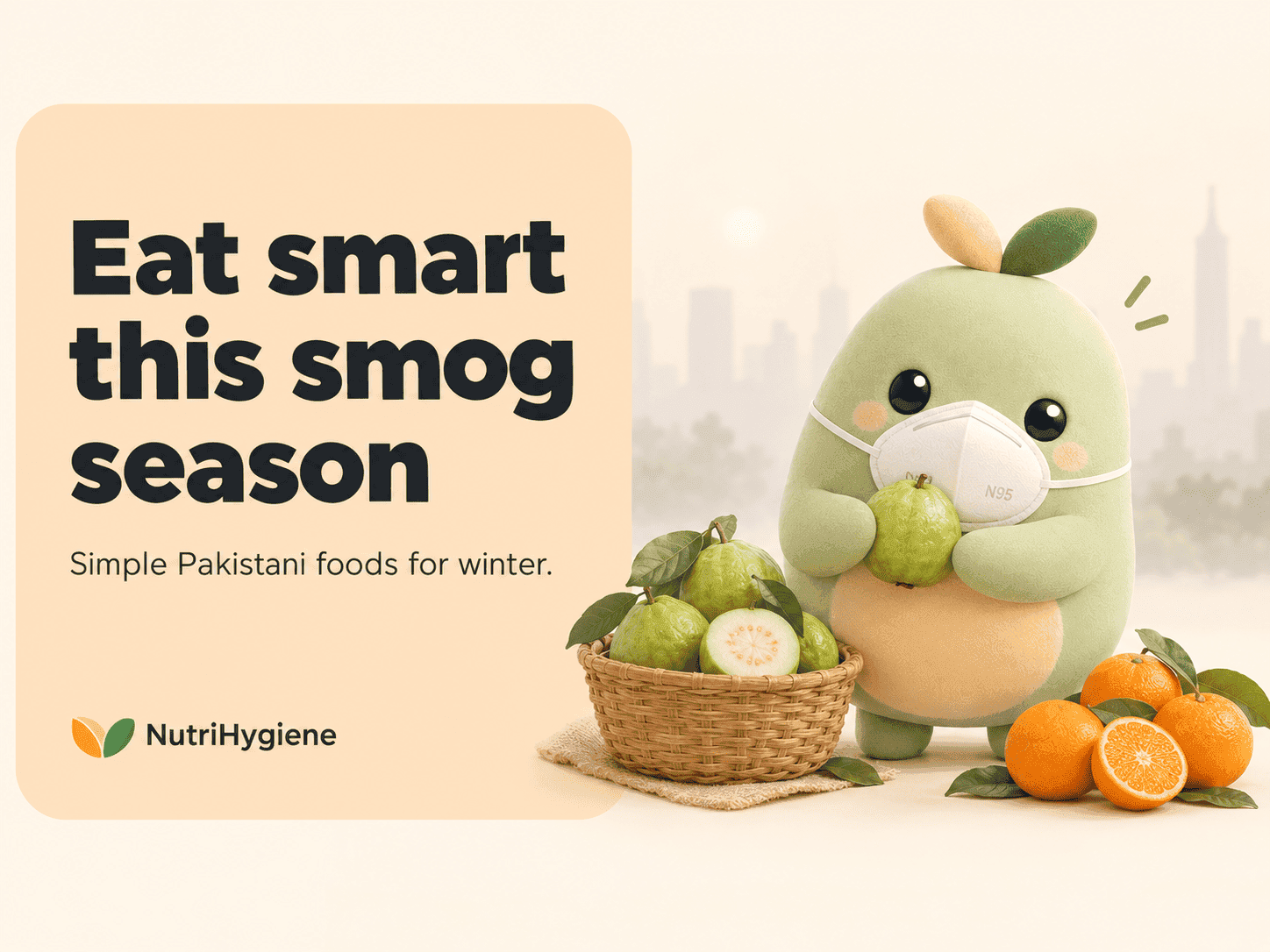
One medium amrood can cover your whole day's vitamin C. Eat it fresh with a pinch of chaat masala instead of buying juice. Whole fruit also gives you fibre, and packaged juices often add sugar.
Which vegetables should I eat more of?
Look for colour. Dark green and orange vegetables are rich in carotenoids, plant pigments the body uses as antioxidants, and these are among the nutrients with the most research behind them for pollution (Whyand et al., 2018).
- Palak, methi and sarson ka saag: cheap winter greens. Cook them with less ghee than usual.
- Gajar (carrots): eat them raw in salad or lightly cooked. Gajar ka halwa doesn't count, sorry!
- Tomatoes: cooked tomatoes in your salan make their antioxidant lycopene easier for your body to use.
Try to fill half your plate with sabzi or salad at lunch and dinner.
How can I get omega-3 on a budget?
Omega-3 fats help calm inflammation in the body. You don't need imported salmon:
- Fish: winter is fish season in Pakistan. Choose grilled, baked or salan fish over deep-fried, once or twice a week.
- Akhrot (walnuts): a small handful (about 28 g) gives roughly 2.5 g of plant omega-3 (NIH).
- Alsi (flaxseed): one tablespoon of ground alsi gives about 2.3 g (NIH). Sprinkle it on yoghurt or mix it into roti atta.
What should I drink?
- Water: cold weather makes us forget to drink. Keep a bottle nearby and sip through the day.
- Warm drinks: kahwa, lemon and ginger water, or a light chicken or vegetable yakhni are comforting and hydrating.
- Honey for a cough: a spoon of honey in warm water may ease a cough for anyone over 1 year old. The UK's NICE recommends it as a self-care option. Never give honey to babies under 1 (NICE NG120).
What should I avoid on high-smog days?
- Fried street food and pakoras every evening. They're heavy on oil, and sitting at roadside stalls adds smoke exposure.
- Sugary drinks and packaged juices. They add calories without real nutrition.
- Smoking and sheesha. They add to the damage pollution already does. If you smoke, smog season is a good reason to stop.
- Outdoor exercise when the AQI is very high. Walk indoors or at home instead.
A simple smog-season day of meals
| Meal | What to eat |
|---|---|
| Breakfast | Egg, 1 whole-wheat roti, tomato and cucumber, kahwa or chai with less sugar |
| Mid-morning | 1 amrood with chaat masala |
| Lunch | Palak with daal, 1–2 rotis, salad |
| Evening | Small handful of akhrot or roasted chana |
| Dinner | Grilled or salan fish (or chicken), sabzi, raita |
| Before bed | Warm water with honey and lemon, if you have a cough |
Want a full week planned around your calories? Get a free 7-day Pakistani meal plan.
Frequently asked questions
Does gur (jaggery) clean the lungs?
Many families believe this, but there is no good scientific evidence that gur removes pollution from the lungs. It's still sugar, so enjoy it in small amounts.
Can food protect me from smog?
No. Food supports your body, but only masks, clean indoor air and limiting time outside reduce how much smog you breathe in.
Should I take vitamin C or immunity supplements?
Most people can get enough vitamin C from fruit like amrood and kinnow. Ask your doctor before taking supplements, especially if you have a health condition or take other medicines.
Is steam inhalation good for smog?
Steam can make a blocked nose feel better, but it doesn't remove pollution from the lungs. Be careful with hot water around children.
When should I see a doctor?
If you have difficulty breathing, chest pain, wheezing, blue lips, or a cough or fever that lasts more than a few days, see a doctor straight away. Don't wait for home remedies to work.
Sources
- World Health Organization: Ambient (outdoor) air quality and health
- Whyand T, Hurst JR, Beckles M, Caplin ME. Pollution and respiratory disease: can diet or supplements help? A review. Respiratory Research, 2018.
- NIH Office of Dietary Supplements: Vitamin C fact sheet
- NIH Office of Dietary Supplements: Omega-3 fatty acids fact sheet
- USDA FoodData Central: Guava, Orange, Mandarin, Tomato
- NICE: Cough (acute): antimicrobial prescribing, NG120
This article is general information, not medical advice. For health conditions, speak with a qualified doctor or dietitian.
Track what you eat, the desi way
Log roti, daal and biryani in the portions you actually eat. The NutriHygiene Android app is free to download.